

Some Thoughts On Wild Animal Welfare And Hunting
How do we tell if being hunted is bad for animals?

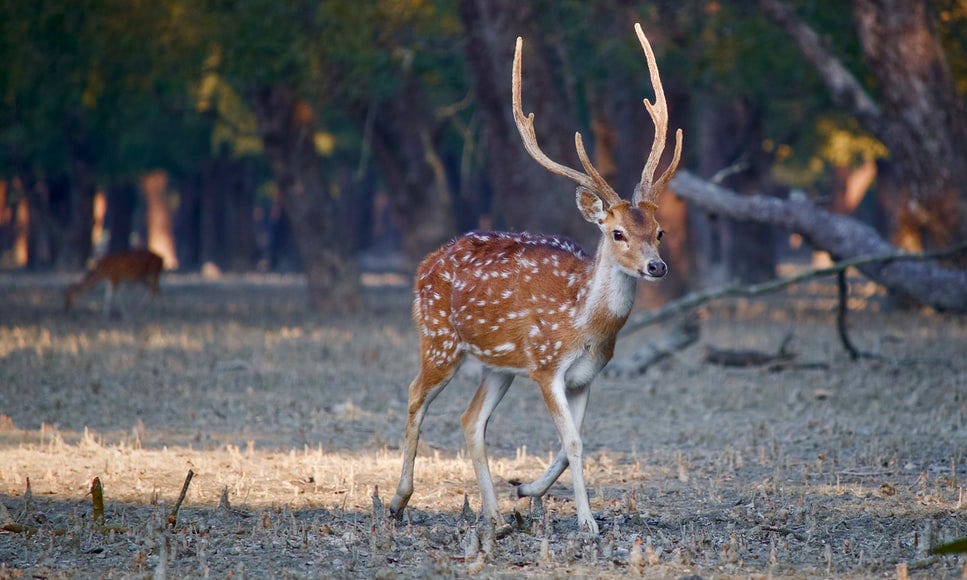
Hunting is a really important topic for wild animal welfare advocates to think about. Hunting is a very commonly used tool for wildlife management and one of the most common ways that humans interact with wild mammals. Anti-hunting activism is some of the only wild animal welfare activism to gain traction and widespread support (including among omnivores)—people really don’t like it when you kill Bambi’s mom.
There are, I think, four important considerations when wild animal welfare advocates are thinking about hunting. (Of course, there are many other important considerations that apply to humans and farmed animals—the effects on agriculture, for example, or environmental preservation—but in this post I’m just talking about wild animals.)
The first is, of course, that hunting might be wrong for non-consequentialist reasons— for example, it might be wrong to kill an innocent conscious being, no matter what. Moral philosophy’s not really my strong suit so I’m not going to talk about that one much, but if you think hunting’s just wrong then that basically settles the issue.
Second, there are the welfare impacts of hunting itself. Dying is usually painful, and being hunted isn’t exactly a picnic either. For example, animals might experience fear, distress, and exhaustion when being chased by dogs. Animals that are injured but escape might suffer from chronic pain or injuries, or die slowly and horribly later. Some animals might be frightened when they observe other animals being hunted.
Third, there’s the fact that animals which are hunted, quite obviously, (a) have shorter lives and (b) die of being hunted rather than of something else. This is probably the most important factor in whether hunting is a good idea for animal welfare, and unfortunately we know almost nothing about it. If an animal’s life is shorter, then they have fewer pleasurable experiences, like sex, grooming, play, eating, and parenting. On the other hand, they also have fewer painful experiences, like injury, excessive heat or cold, starvation, or social rejection. Whether pain tends to outweigh pleasure for animals is, uh, a controversial topic among animal welfare advocates to say the least. Probably there isn’t a well-defined answer for animals as a whole, and we’d have to do a lot of very specific empirical study about various species.
All animals die. The pain of death is not perpetually avoidable for any mortal species. So one really important question about hunting is whether being hunted is more or less painful than whatever the animal would have died of otherwise. This isn’t a point original to me; hunters regularly defend hunting by saying that it’s better than the animals dying of starvation. Even if your life is pretty good, you might want to cut it short to avoid a horrible, torturous death without any painkillers. Conversely, if hunting is more painful than however animals would have died otherwise, we should leave them to die of sickness or hunger or predation instead of taking matters into our own hands.
Finally, there are the indirect effects of encouraging hunting. These may wind up being the most important effects. Hunting may reduce the population of hunted species, which has various effects on surviving members of that species, members of other species, and the ecosystem as a whole. Hunters might campaign for certain programs, like vaccinations, predator control, habitat protection, or keeping game species populations high. Hunting may decrease or increase people’s respect and empathy for wild animals. It may lead people to support more intervention into the wilderness. Again, we have absolutely no idea about most of these considerations, and they’re worth thinking about.
I’ve often said that a fruitful approach for wild animal welfare advocates is to look at the ways that humans are already engaging with wild animals and research whether they’re good (and should be expanded) or bad (and should be campaigned against). Many people assume that hunting, as a form of human intervention, must be bad for wild animals as a whole. But it’s not obvious to me that that’s the case (setting aside non-consequentialist moral intuitions). Without research, we can’t know if it’s more painful to die by a hunter’s bullet or a wolf’s teeth, whether shortening an animal’s life is a harm or a mercy, whether an increase in hunting will lead to dismissal of wild animals’ experiences which sets back the entire wild-animal welfare project. We know very very little, but I do think we should approach this subject with an open mind.
I mean, if we're talking about analyzing the morality of killing, there seems to be something fundamentally missing here. Basically, I don't think analyzing things in terms of pleasure/pain is the way to go. Like, if we were talking about killing a person that wouldn't be the way to analyze it, right? There, I would conceive of the primary harm not so much in terms of causing *pain* but rather in terms of *thwarting* the person, preventing them from accomplishing their goals. (See also this LW post of mine: https://www.lesswrong.com/posts/iWJ5kzeqvx4kvB527/goal-thinking-vs-desire-thinking ) I realize not everyone would agree with me on this, but I think that's the better way to think of things!
Now, animals aren't people, so it may make sense to take a different stance towards them, or at least some or most of them. Still, I think it is at least worth mentioning the issue.
A consideration that moves me in the direction of thinking that hunting is probably net-positive for animal welfare is that in many areas large carnivores have been locally extirpated, so most of the animals that are hunted would otherwise have their populations expand until they ate all the food. I think this would result in either a Malthusian equilibrium being reached or the population undergoing a boom and bust cycle every time it eats all the available food. Starvation, as you say, sounds far more painful than getting shot. Therefore I think that vegetarians have little reason to refrain from eating hunted meat in places where some of the downward pressure on prey animal populations is exercised by human hunters. I posted about this one my blog a couple of times (https://goodoptics.wordpress.com/2021/12/22/meat-eating-for-vegetarians/ https://goodoptics.wordpress.com/2022/01/03/response-to-z-b-on-hunting/).